Meet Gus. Gus is our family dog—or was, when I was born. My grandfather celebrated the occasion by sculpting his bust, then casting enough copies that he could gift each (human) family member with a memento of this momentous occasion: Gus becoming a big brother. Gus sat for his portrait, and slept for it, and drooled around the house and my first word was dog, sometime later. In English and in German, I received a homemade—teddy dog? From my grandmother. Of which Gus also approved. Gus was a bullmastiff and the size of Mt. Rushmore, to me, I’d tug on his ears. And it was one of those ears, decades later, that got injured during our journey home to Texas.
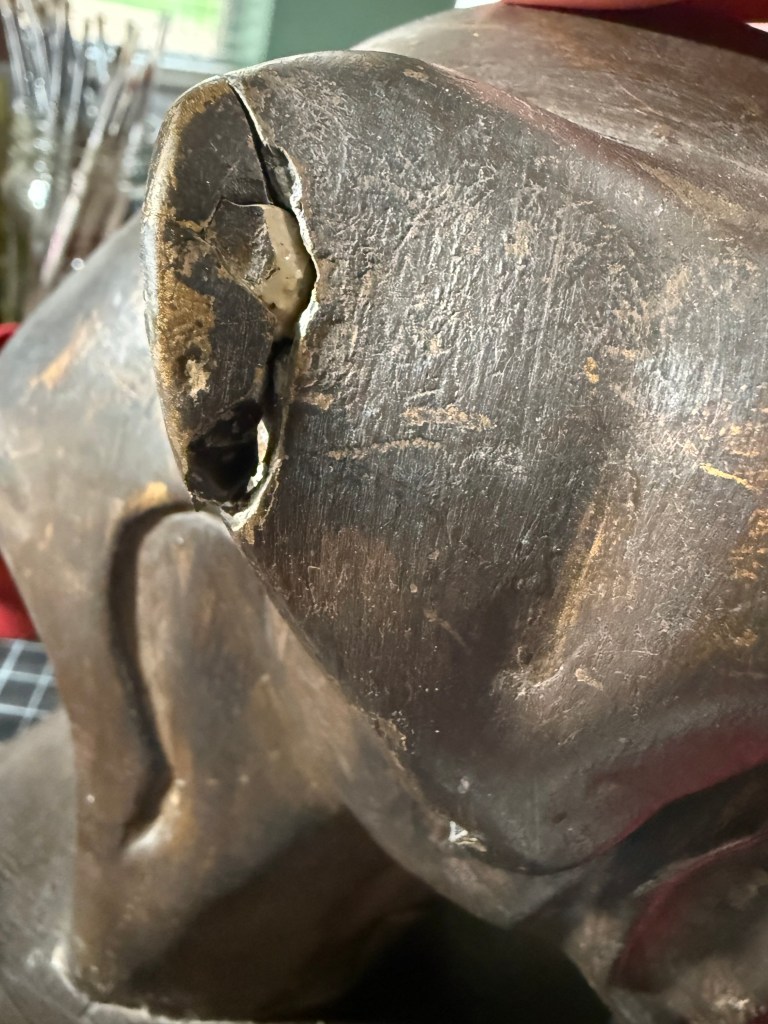
Gus is one of several keepsakes who always travel with me in my suitcase, but even Samsonite can only do so much for an elderly dog. To be loved is to become changed, after all. Here, I’ve taken the first step off fitting the pieces I was able to retrieve (and gluing them into place with AK’s fantastic Magnet glue), but the rest of his poor ear was dust. So, with my husband’s encouragement, I decided to give Gus the full museum treatment—and realized, as I was doing so, that a little knowledge of the restoration process might be useful to miniaturists.
You will need:
Air dry porcelain clay: For my money, La Doll is the best on the market. Your mileage may vary, I know it’s expensive, but it’ll keep sealed up properly and a little goes a long way. You want air dry, specifically, as you don’t want to be putting this in the oven! Hopefully for obvious reasons, but high heat is at high risk of destroying whatever finish is on the original piece (among other potential issues).
Paraloid B-72: The critical barrier layer (preventing moisture damage). Even with inert stains, the moisture in raw clay will instantly compromise the original bust. Water softens and dissolves gypsum plaster and acts as a catalyst for bronze corrosion. Wet clay should never touch the original artifact directly. So, before introducing the clay to the bust, apply a reversible, museum-grade barrier layer to the original surface. Paraloid B-72 is an acrylic copolymer dissolved in acetone; it creates an imperceptible, non-reactive film that prevents both water and pigment migration.
Acetone: to clean your brush, if you’re using a brush, and dilute the Paraloid B-72 if necessary. It’s important here to use 100% acetone, and not some acetone solution for nail removal or etc, as those tend to have additives, such as oil and etc.
Applicator/Brush: You can get these on Amazon or Ebay or Temu or just about anywhere, they’re for automotive work but a lot of nail techs also use them so a nail supply store is a good bet (for the acetone, too). You can also sacrifice a brush, I have a set of brushes put aside for exactly these sorts of jobs, just because I prefer that kind of control.
Artist’s pigments (such as Sennelier): To prevent reactive chemicals from leaching out of the wet clay body, it’s imperative that we use chemically inert, stable, pure color. Shaving down some chalk pastels, or even using makeup might seem like an attractive shortcut—a powder is a powder, right?—but anything that’s already been shaped has binders, both to hold it together and to prepare it for its intended use. And those binders might contain something which will, over time, discolor or even melt the original piece!
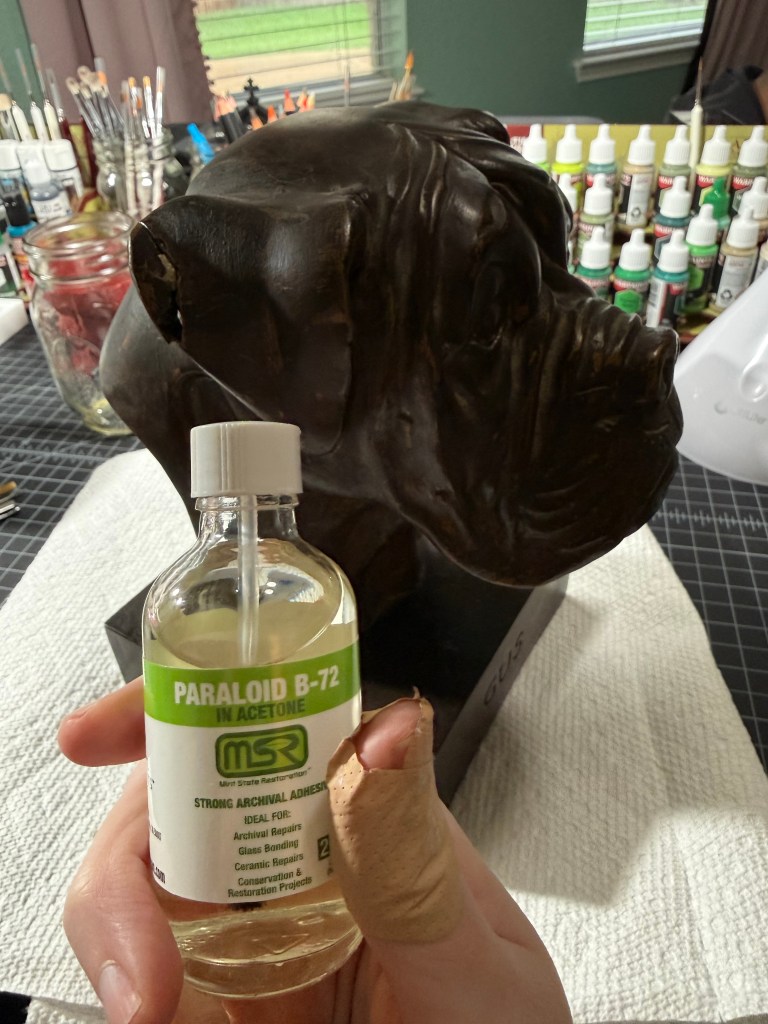
Start with a thin layer of Paraloid B-72. While it’s drying, make coffee! Acetone evaporates extremely quickly, so you’ll be ready for the next step before you’ve finished drinking it. I bought this bottle on Amazon, for about fifteen bucks.
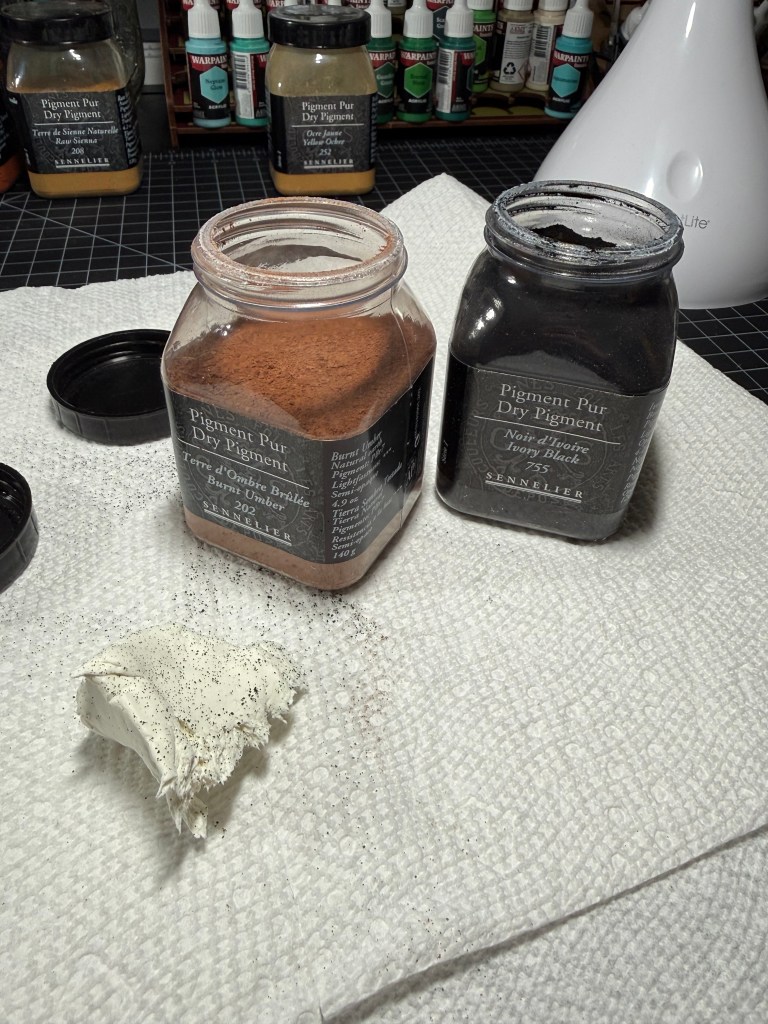
I opened my pigment, realized the ceiling fan was blowing it everywhere, and felt even stupider than usual but then I got to mixing. You don’t want more than about 15% of the total volume to be pigment and you also want to add it in slowly or face a blowout when you start mixing.
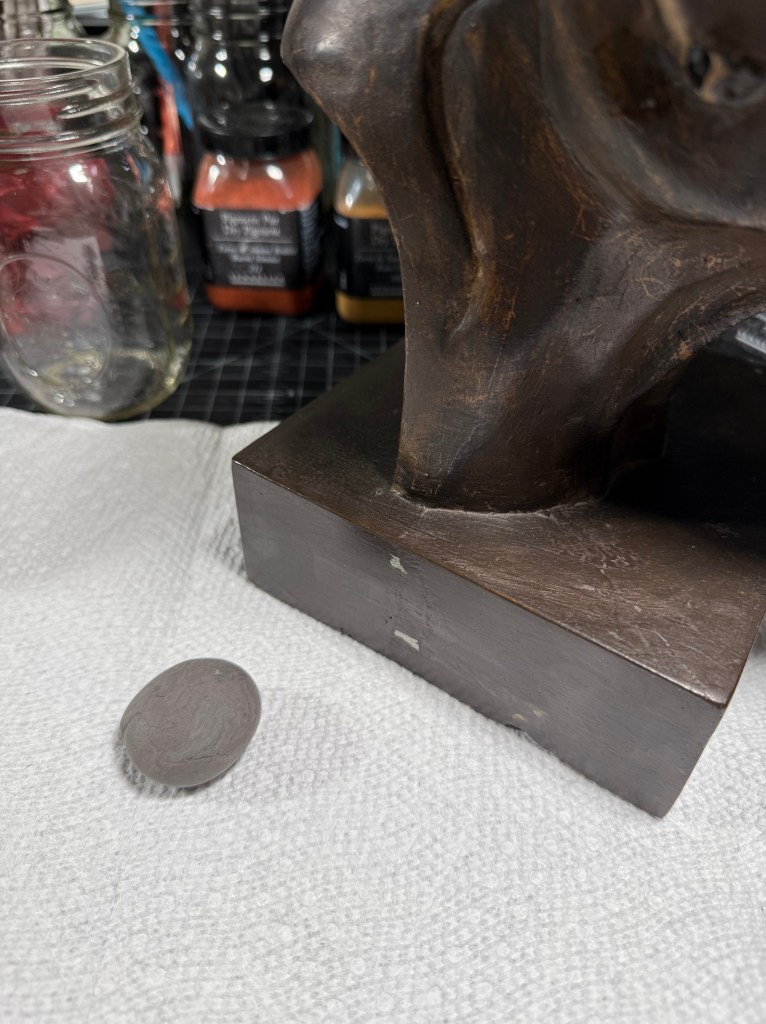
The final product isn’t going to be an exact match. What I’m going for here with Gus is matching tone—just like at the museum, I wanted the fix to be, not glaring but obvious, just dull enough to show “this is where the original isn’t” without compromising the integrity of the piece. Your mileage may vary, however; for those wanting an undetectable fix, sealant and a little acrylic paint are the solution (which I’ll cover in a future tutorial, if and when I’ve got something else broken that needs fixing).
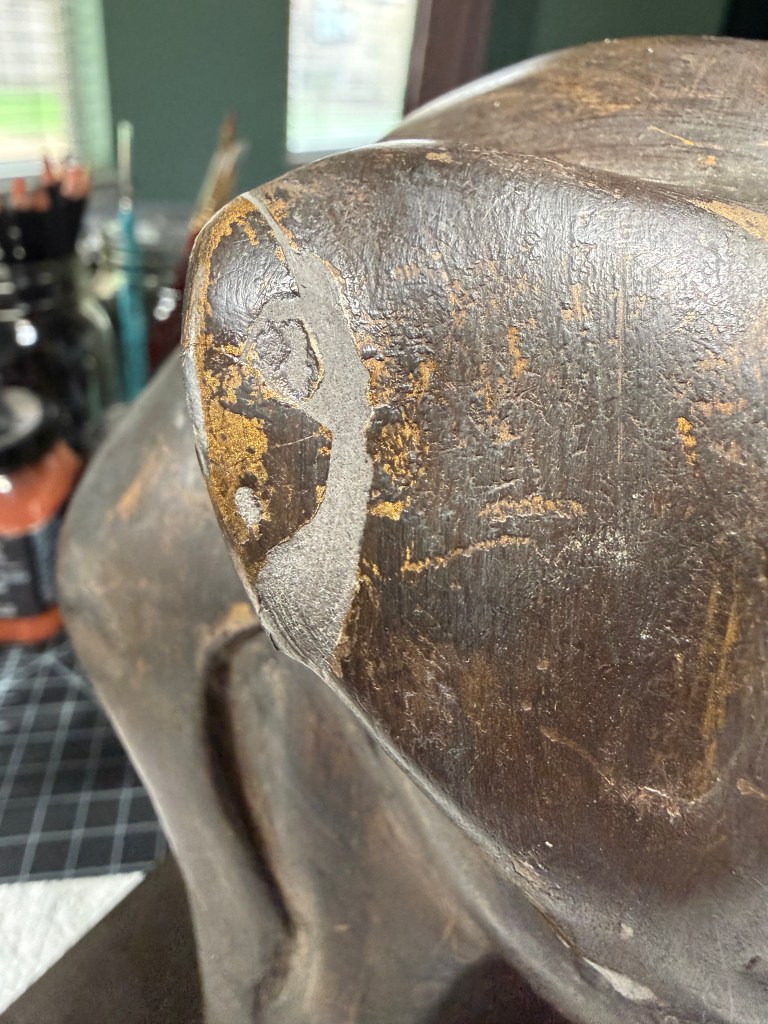
Here’s Gus after the first pass. Even La Doll is subject to some shrinkage, and it’s pretty impossible to get things right on the first pass regardless so what I’ve done here is fill Gus in with the clay, then smooth it over with a wet q-tip (using clean water). Once your artifact has had about 24 hours to dry, you can do a second pass if needed. My goal here is not to do any kind of sanding, as that risks damaging the original piece; building up slowly, smoothing as you go is slower but guaranteed to produce a better end result.
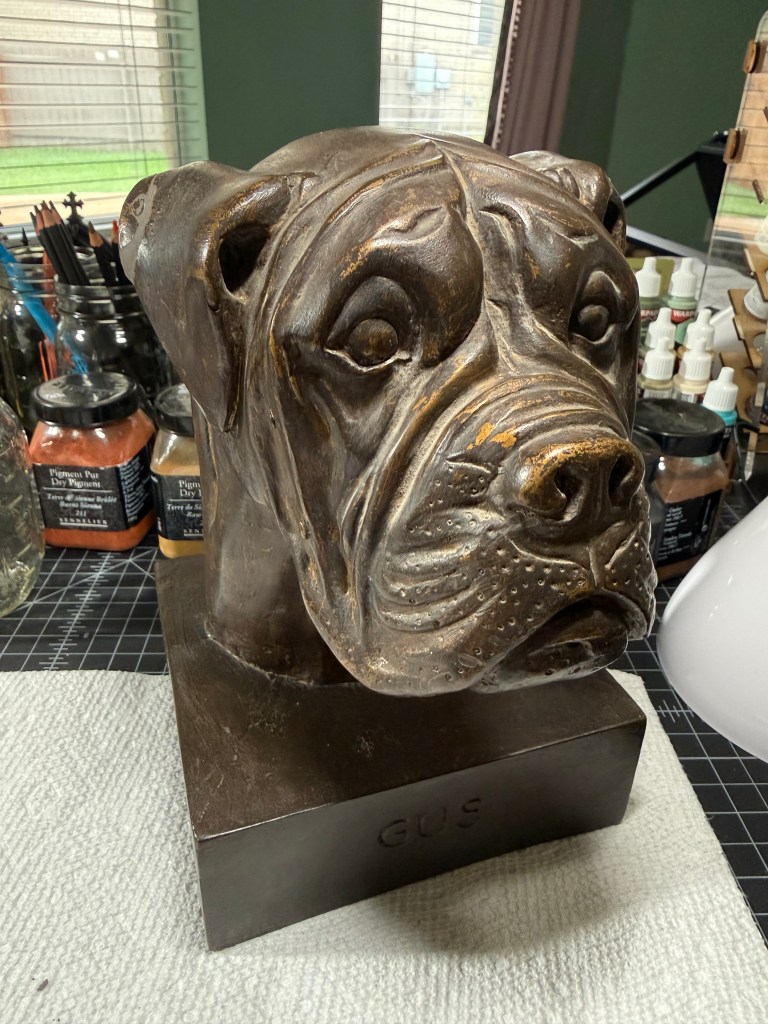
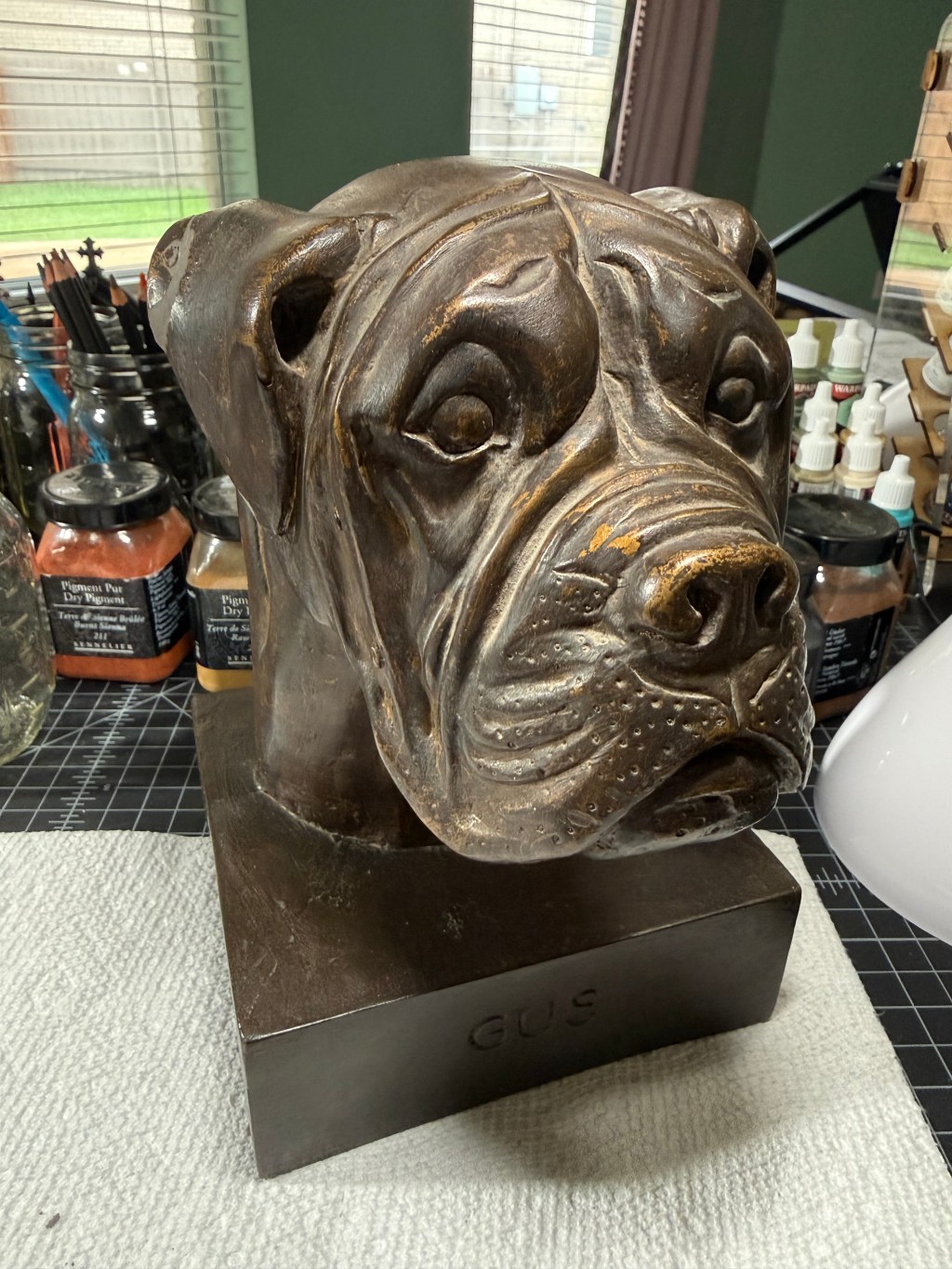
And here we are! Gus is ready to return home, which is a shelf in my husband’s office. He works from home so he’s right down the hall. It’s a strange thing, for me, realizing that I’ve known him longer than I knew either my grandfather or my father, we’ve grown up together and I devoutly hope that the “sickness” part of in sickness and in health is behind us both. But marriage is like The Velveteen Rabbit, as is losing an ear.
To be loved is to be changed. True connection doesn’t demand that we alter ourselves to become worthy of it; rather, it welcomes us exactly as we are, in all of our grace and our shame. Yet, love is a living entity meant to grow, and as it grows, it quietly stretches the permanent-feeling boundaries of who we think we are. It reshapes the way we speak, the way we listen, and the way we choose to stay and repair what is broken instead of disappearing into the safety of silence. We can’t learn security in a vacuum, and the people who truly see us inevitably leave their fingerprints on our choices, our thoughts, our language (and our ears). This transformation isn’t a loss of identity, but an expansion of it—a gentle, persistent invitation to confront our hidden darkness and trust another person with our vulnerabilities. Ultimately, being loved alters us because it provides a safe space where staying the same becomes impossible, proving that while love never forces us to change, it softens us enough to allow growth to happen naturally.
Just as being loved leaves its mark on us, the wear and tear on a cherished keepsake is simply the physical proof of a life fully shared—Gus has been with me now on four continents, through loss and heartbreak, war and adventure. We often think of damage as something that diminishes value, yet a chipped mug, a mended seam, or a faded book spine tells a story that a pristine, untouched object never could. Like the Velveteen Rabbit, whose fur is loved off until he becomes Real, our most treasured belongings earn their true meaning through use, friction, and time. Choosing to repair these items rather than discard them is an act of devotion—a quiet refusal to erase the history we have built with them. Each stitch, patch, or dab of glue becomes part of the object’s identity, honoring the moments that wore it down while ensuring it stays whole enough to carry new memories forward.
Bei mir bist du wunderschön, Gus.


Leave a Reply